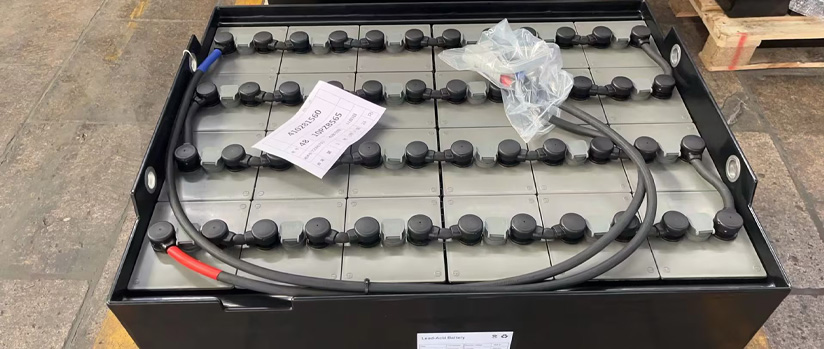
Las baterías de plomo-ácido se utilizan ampliamente en carretillas elevadoras, transpaletas, sistemas de alimentación de respaldo y otros equipos industriales. Un proceso de descarga adecuado es fundamental para mantener un alto rendimiento de la batería, prolongar su vida útil y garantizar la seguridad.
¿Qué significa "descarga" en una batería de plomo-ácido?
La descarga consiste simplemente en utilizar la energía almacenada en la batería para alimentar el equipo. Cada vez que la carretilla elevadora o la transpaleta están en funcionamiento, la batería se descarga.
La descarga controlada le proporciona: Voltaje estable, Salida de energía eficiente, Menor daño interno a las placas de la batería.
Profundidad de descarga recomendada (DoD)
Una de las reglas más importantes para las baterías de plomo-ácido: evitar la descarga excesiva.
Buenas prácticas: Mantenga la profundidad de descarga entre el 50 % y el 80 %. Intente que el estado de carga (SOC) no baje del 20 %.
La descarga profunda conduce a: Sulfatación de placas, Pérdida de capacidad, Menor duración de la batería.
Cómo descargar correctamente las baterías de plomo-ácido
1. Utilice equipos dentro de la carga nominal.
Descargue siempre la batería durante el funcionamiento normal de su equipo. Evite conectar cargas incompatibles, ya que una corriente de descarga inestable puede dañarla.
2. Mantenga la corriente de descarga constante.
Las descargas repentinas de alta corriente provocan:
Aumento de la temperatura interna
Corrosión de placas más rápida
Menor eficiencia
Consejo: Utilice controladores y motores compatibles para mantener la corriente estable durante el funcionamiento.
3. No lo descargues completamente
Descargar completamente una batería de plomo-ácido hasta el 0% es una de las maneras más rápidas de arruinarla.
¿Por qué es malo?
Provoca sulfatación irreversible
Dificulta la recarga
Reduce permanentemente la capacidad
Recomendamos combinar la batería con un cargador inteligente que evite la descarga profunda y optimice los ciclos de carga.
4. Cargar inmediatamente después de la descarga.
Las baterías de plomo-ácido no deben permanecer descargadas durante un tiempo prolongado.
Buenas prácticas:
Cobrar después de cada turno
No guardes la batería con poca carga.
Retrasar la carga puede provocar sulfatación y una menor eficiencia.
Consejos de seguridad durante el alta
El manejo de las baterías de plomo-ácido requiere cuidado:
Mantenga la zona bien ventilada para evitar la acumulación de gases.
Evite cortocircuitos o contacto directo entre terminales.
Mantenga las baterías alejadas del calor excesivo. Revise periódicamente los cables y conectores.
Por qué es importante una descarga adecuada.
Una correcta gestión del alta hospitalaria aporta beneficios reales:
Mayor duración de la batería
Rendimiento constante del equipo
Menores costos de mantenimiento
Operación más segura
Para las empresas que dependen de equipos de manipulación de materiales, una gestión adecuada de las baterías afecta directamente a la productividad y la rentabilidad. Vendemos productos industriales de alta calidad. baterías de plomo-ácido , cargadores compatibles y accesorios al por mayor Rendimiento fiable, precios competitivos, amplia experiencia en exportación y envíos rápidos. Ofrecemos soluciones de alimentación fiables para carretillas elevadoras y transpaletas a distribuidores y mayoristas de todo el mundo.
Conclusión
Descargar correctamente una batería de plomo-ácido no se trata solo de aprovechar la energía almacenada, sino de proteger su inversión. Al controlar la profundidad de descarga, evitar descargas completas y recargarla a tiempo, puede prolongar significativamente la vida útil de la batería y mantener las operaciones funcionando de manera eficiente. Contáctanos Para obtener consejos prácticos y soluciones de baterías de alto rendimiento diseñadas para su equipo.
Obtenga las últimas ofertas de HUAN XIN Mecánica y Eléctrica

Envíanos un correo electrónico
Correo electrónico : simon@lifttops.com
DIRECCIÓN


 IPv6 red compatible


 español
 español
 English
 français
 русский
 português
 العربية