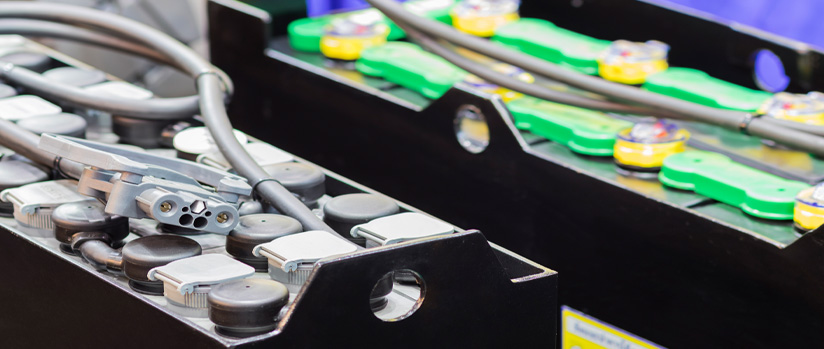
En el sector de la manipulación de materiales, la modernización de carretillas elevadoras antiguas con baterías de litio es cada vez más común. Muchas empresas están sustituyendo los sistemas de plomo-ácido por sistemas de iones de litio para aumentar la eficiencia, reducir el mantenimiento y prolongar la vida útil de los equipos, sin necesidad de comprar carretillas elevadoras nuevas.
Pero no todas las carretillas elevadoras son aptas para una actualización a batería de litio. Para hacerlo correctamente, es necesario comprobar cuidadosamente aspectos como la compatibilidad eléctrica, las limitaciones de espacio, los sistemas de seguridad y las exigencias reales de la operación.
Compatibilidad del sistema eléctrico
Lo primero y más importante que hay que averiguar es si la carretilla elevadora... sistema eléctrico De hecho, puede funcionar con una batería de litio.
Aspectos clave a comprobar:
Adaptación de voltaje (sistemas de 24 V / 36 V / 48 V / 80 V)
Compatibilidad del controlador
Tipo de motor (sistema CC o CA)
Requisitos del sistema de carga
Las baterías de litio generalmente requieren un cargador específico y un sistema de gestión de batería (BMS) compatible. Si estos no están integrados correctamente, podrían surgir problemas de rendimiento o fallos en el sistema.
Tamaño y disposición del compartimento de la batería
Las carretillas elevadoras más antiguas fueron diseñadas originalmente para baterías de plomo-ácido voluminosas. Las baterías de litio suelen ser más compactas, pero su correcta instalación sigue siendo fundamental.
Aspectos a evaluar:
Dimensiones de la bandeja de la batería
Distribución y equilibrio del peso
Estabilidad de montaje
Espacio para el tendido de cables
En algunos casos, necesitarás una batería o un adaptador a medida para asegurarte de que todo quede bien sujeto.
Consideraciones sobre el peso y el contrapeso
Las baterías de plomo-ácido son pesadas y a menudo forman parte del sistema de contrapeso de la carretilla elevadora. Las baterías de litio son más ligeras, lo que puede afectar a la estabilidad.
Aspectos importantes a tener en cuenta:
Si se necesita contrapeso adicional
Cambios en la capacidad de carga
Estabilidad a la altura máxima de elevación
Un correcto equilibrio garantiza un funcionamiento seguro y ayuda a prevenir el riesgo de vuelco.
Costo y retorno de la inversión a largo plazo
Si bien los sistemas de adaptación de litio requieren una mayor inversión inicial, pueden reducir significativamente los costos a largo plazo.
Los beneficios incluyen:
No requiere riego ni mantenimiento de la batería.
Menor consumo de energía
Mayor vida útil
Menos tiempo de inactividad
Mayor productividad
En la mayoría de los casos, verá un retorno de la inversión en un plazo de 1 a 3 años, dependiendo de la intensidad de uso de la carretilla elevadora.
Mejoras en la infraestructura de carga
Las baterías de litio no se cargan de la misma manera que los sistemas de plomo-ácido. Es posible que necesite actualizar:
Tipo de cargador (cargador inteligente diseñado para baterías de litio)
Medidas de seguridad en la estación de carga
Capacidad de suministro de energía
Si se hace correctamente, la modernización de montacargas antiguos con baterías de litio es una inversión inteligente. Al evaluar cuidadosamente la compatibilidad eléctrica, el ajuste físico, los sistemas de seguridad y las necesidades operativas, las empresas pueden aumentar significativamente la eficiencia y reducir los costos operativos a largo plazo. Si está planificando un proyecto de actualización de baterías de litio para montacargas, trabajar con un proveedor experimentado puede ayudarle a evitar riesgos de compatibilidad y garantizar una transición sin problemas a un sistema de energía más eficiente.
Techos elevables Ofrecemos soluciones de actualización de litio para flotas de montacargas, incluyendo sistemas de baterías, controladores, cargadores y repuestos relacionados. Nos comprometemos a ayudar a nuestros clientes a lograr un rendimiento estable y una transición sin problemas. Si tiene alguna necesidad de producto o pregunta técnica, por favor, ¡Contáctanos!
Obtenga las últimas ofertas de HUAN XIN Mecánica y Eléctrica

Envíanos un correo electrónico
Correo electrónico : simon@lifttops.com
DIRECCIÓN


 IPv6 red compatible


 español
 español
 English
 français
 русский
 português
 العربية